
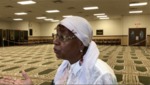
Oral History Interview with Tahira Hassanein Khalid on September 20, 2020
Oral history interview with Tahira Hassanein Khalid, conducted by Ayesha Cook on September 20, 2020. Interview written by Dr. Alisa Perkins (Research Director) and Ayesha Cook. Tahira Hassanein Khalid was born in Detroit to parents who hailed from West Virginia and Georgia, and she was raised in Ecorse, Michigan. When Khalid was five years old, her father, Osman Hassanein, converted to Sunni Islam, with her mother, Khalida Hassanein converting soon after. In her interview, Khalid relates how in 1957, Osman Hassanein became one of the first African-American Muslims in the nation to complete the hajj. After returning from pilgrimage, Osman Hassanein helped establish Masjid Al-Mu’mineen, one of the earliest Sunni mosques associated with the African American Muslim community. In his capacity as mosque board president, he was instrumental in forging inter-ethnic and inter-racial forms of friendship and cooperation within the local Muslim community. In her interview, Khalid talks about what it was like growing up as part of the ethnically-diverse Islamic environment fostered by her parents. Khalid describes the course of her education that led to her earning a graduate degree in social work from the University of Michigan. She details aspects of her long and productive career in social work, and her special focus on the interests of women and under-served communities including immigrants and African Americans. She discusses her long-time work with Muslim Family Services, in which, among other responsibilities, she helps provide services to women in transitional housing. She also has worked for Wayne State University School of Medicine and for other agencies advancing initiatives to better understand and address the mortality rates for African American infants in Detroit. Khalid was one of the founders of a group called Muslimah University which offers a monthly forum for women to draw upon their own talents and skills for the group’s collective education and empowerment.
In Copyright - Educational Use Permitted: Dream of Detroit Interviews were made possible by funding from the Pillars Grant and Whiting Foundation. Content is for educational purposes only and non-reproducible; interviews are not to be duplicated, but may be linked through ScholarWorks with appropriate attribution. Please direct any questions about copyright to scholarworks@wmich.edu.