
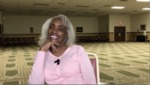
Oral History Interview with Teresa G. Clarington on March 28, 2021
Oral history interview with Teresa G. Clarington, conducted by Naimah Siddiq on March 28, 2021. Interview written by Dr. Alisa Perkins and Naimah Siddiq. Teresa Clarington was born in Detroit, Michigan to parents who hailed from Florida and Georgia. Her father, Reverend Dr. Isaac Clarington, was a pastor in the African Methodist Episcopal Church who migrated to Detroit to work in the auto industry and later became an entrepreneur, religious leader, and world traveler. After graduating from Central High School in 1973, Clarington enrolled in Shaw College to study nursing. She also pursued higher education at Marygrove College and Wayne State University. Clarington worked in various aspects of customer service, and then opened her own printing business. Clarington has been a member of the Greater Quinn A.M.E. Church for fifty-eight years and volunteers with the church to distribute resources to those in need. Additionally, Clarington serves as president for the Longfellow Block Club in west Detroit. In this capacity, Clarington acts as a liaison between neighborhood residents and municipal officials, while collaborating with organizations like Dream of Detroit on neighborhood revitalization. Relatedly, Clarington also serves as a board member for Life Remodeled, an organization devoted to improving Detroit neighborhoods across the city by targeting people and areas that need it the most. In the interview, Clarington discusses both positive and negative aspects of growing up in Detroit in the 1960s. Notably, she details her memories of the 1967 Detroit uprising, when the police and National Guard were deployed in her neighborhood. Clarington also describes her experiences working with her church and other organizations to improve the lives of fellow city residents, while discussing her dreams for a rejuvenated Detroit that equitably meets the needs of all its citizens.
In Copyright - Educational Use Permitted: Dream of Detroit Interviews were made possible by funding from the Pillars Grant and Whiting Foundation. Content is for educational purposes only and non-reproducible; interviews are not to be duplicated, but may be linked through ScholarWorks with appropriate attribution. Please direct any questions about copyright to scholarworks@wmich.edu.